
The Colors of Mbare Flats: An Open-Air Gallery in Harare

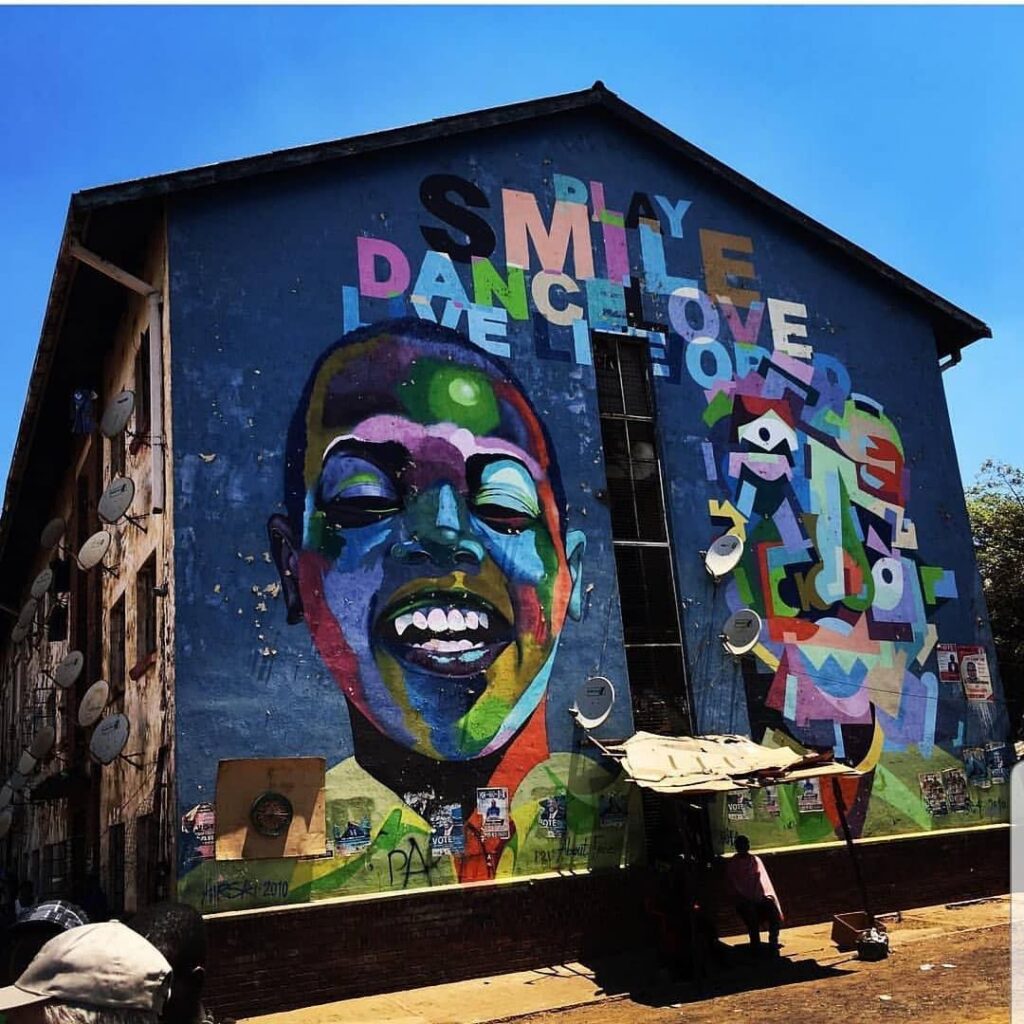
Nestled just south of Harare’s city center, the aging concrete blocks of Mbare Flats might at first seem drab – satellite dishes and laundry lines crisscross the scarred walls. But today those same walls are vividly alive with murals. Over the past decade, artists have transformed Mbare’s hostels into a colorful canvas. The contrast is striking: once notorious for graffiti and neglect, the buildings now speak of love, beauty, and joy. In the midst of Mbare’s grit and poverty, these murals have become a bright declaration that the community has much to celebrate and share.
Mbare is Harare’s oldest township, founded in the early 20th century, and for generations it has been known for bustling markets, music halls, and sports legends – even as it earned a reputation for crime. Local painters have set out to change that narrative by covering wall after wall with images of local heroes. During a public art project in 2010, one of the first murals featured two happy sisters. Since then, dozens of murals have appeared, many honoring Mbare’s sons and daughters – from famous footballers and Rastafarian icons to Zimdancehall superstars. Artists like Warren Maruta and his cousin Basil Matsika aimed to paint off the township’s unfavorable image with magnificent portraits celebrating community figures. Their works, including pieces titled Respect, Lion of Judah, Scorpion, President, and Rasta Baby, are infused with pride and meaning.
Matsika has spoken about using murals to shield the community from obscenity, replacing vulgar graffiti with uplifting images of musicians, athletes, and elders. His paintings tell stories – one features the late dancehall artist Soul Jah Love as a national hero. These murals serve as a kind of museum of memory, preserving Mbare’s legacy and teaching children that greatness can come from their own streets.
The community impact has been substantial. People frequently stop to pose for pictures beside the murals, and even visitors come to see the portraits of their favorite artists and sports stars. These walls have turned Matapi Road into a gallery of local stories. In a place once known primarily for hardship, art has become a source of pride and hope. The artists, despite lacking secure jobs or money, have remained devoted to their neighborhood, rejecting stereotypes and asserting that Mbare has so much to offer.
Collective mural projects have also flourished. Youth groups, including female-led collectives, have spread empowering themes and public health messages across Mbare and neighboring suburbs. These murals offer cultural access to those who can’t afford galleries, break down class barriers, and build community through collaborative painting, often using recycled materials. The work gives young people purpose and creativity in challenging environments.
One standout initiative is the Mbare Art Space, established around 2012 by local artists. Located in a repurposed colonial-era beer hall, it offers studio space, workshops, and exhibitions. The goal is to make art accessible and to spark regeneration from within. This center has hosted shows focused on environmentalism, engaged children, and sent local artists to international festivals. In 2024, Mbare Art Space was even showcased at Senegal’s Dakar Biennale, proving that creativity born in Mbare can inspire on a global stage.
Today, the murals of Mbare Flats continue to evolve. New paintings are regularly added by youth groups and visiting artists. When city officials occasionally object to the street art, artists explain it as a service to the community – and increasingly, this is being recognized. What was once derided as unsightly concrete is now celebrated as a canvas of cultural pride. Walk through Matapi or Chishawasha hostels, and you’ll encounter Ragamuffin musicians, Rastafarian symbols, and portraits of celebrated figures. Each mural tells a story – defiantly optimistic, defiantly Mbare.
These murals remind us that art can flourish anywhere, and that communities have the power to rewrite their own narratives. As one resident expressed it, local heroes have put Mbare on the map, and in turn, the murals have been painted for posterity. They are not just decoration; they are acts of resistance and remembrance. In Mbare, every painted brick affirms that this community endures, and its spirit will not be forgotten.
